Machines & Accessories
(32862)power tools and accessories cover the machines and supporting equipment that form the backbone of a professional workshop. From lathes and milling machines to clamping devices and measuring instruments, this category offers the tools you need for a wide range of machining and finishing tasks. Choose the right equipment based on your specific work, the materials you handle and the precision required.

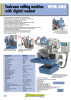
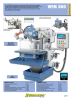


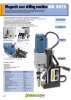
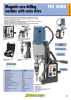
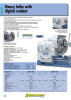
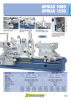






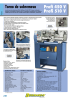
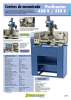
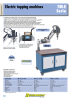
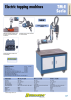












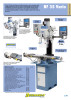
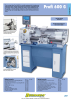


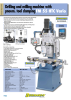


Choosing the right machine for your workshop
power tools and accessories cover a wide range of tasks, from shaping and cutting to drilling, grinding and measuring. The right choice depends on the material you work with, the precision required and the size of your workpieces. Whether you need a lathe for turning operations, a milling machine for complex profiles or a planer for surface finishing, each tool type serves a specific purpose. Understanding these differences helps you invest in equipment that matches your actual workflow rather than buying a general-purpose machine that may not deliver the results you need.
When selecting a machine, consider the primary operations you will perform most frequently. A dedicated tool for your main task will typically offer better performance and easier operation than a multi-function unit. Also think about the workspace available, the power supply in your workshop and the level of automation that suits your production volume. These factors together determine which machine type and configuration will serve you best over time.
Accessories and support equipment
Machines rarely work in isolation. Clamping devices, tool holders, coolant systems and measuring instruments all play a role in getting the most from your equipment. Choosing the right accessories means matching them to your machine’s interfaces and your specific tasks. A well-fitted vise, for example, can make the difference between a secure hold and a workpiece that shifts during cutting. Similarly, the correct tool holder ensures that your cutting tools are positioned accurately and safely.
Before purchasing accessories, check the compatibility with your machine’s mounting systems and the range of workpiece sizes you handle. Some accessories are designed for specific machine types or sizes, so verifying fit is essential. Also consider whether you need additional support equipment such as compressors or power generators, especially if your workshop lacks a stable power supply or requires compressed air for certain operations.
Understanding the category
power tools and accessories encompass the machines and supporting equipment that form the backbone of a professional workshop. This category includes everything from large stationary machines like lathes and milling machines to smaller tools and the accessories that make them functional. The range is broad, so it is important to identify which tools and accessories are relevant to your specific work before browsing the full assortment.
Frequently asked questions
What is the difference between a lathe and a milling machine?
A lathe rotates the workpiece while the cutting tool stays stationary, making it ideal for creating cylindrical shapes and turning operations. A milling machine, on the other hand, rotates the cutting tool while the workpiece remains fixed, which is better suited for creating flat surfaces, slots and complex profiles. The choice between the two depends on the geometry of the parts you need to produce. Both are essential power tools and accessories for a professional workshop, serving distinct but complementary roles in the machining process.
How do I choose the right size of machine for my workshop?
Consider the maximum size of workpieces you need to handle and the space available in your workshop. A machine that is too small will limit your production, while one that is too large may not fit or may be unnecessarily expensive. Check the machine’s working envelope and footprint against your workspace dimensions before making a decision.
What accessories are essential for a milling machine?
Essential accessories for a milling machine include a set of tool holders, a vise or clamping system, and a coolant system if you are working with materials that generate significant heat. You may also need a range of milling cutters and end mills depending on the materials and operations you perform. These accessories ensure that you can perform a variety of tasks without constantly changing equipment.
Do I need a compressor for my workshop machines?
Some machines, such as pneumatic tools or certain coolant systems, require compressed air to operate. If your workshop includes such equipment, a compressor is necessary. Check the air pressure and flow requirements of your machines to ensure that the compressor you choose can meet them. If you do not have a stable power supply, a power generator may also be needed.
How important is the power source for workshop machines?
The power source affects the performance and reliability of your machines. Most workshop machines require a stable electrical supply, and some may need a three-phase connection for higher power demands. If your workshop lacks a suitable power supply, you may need to install a new connection or use a power generator. Ensuring that your power source matches the requirements of your machines is crucial for safe and efficient operation.
What should I look for in a planer?
When choosing a planer, consider the size of the workpieces you need to flatten and the level of precision required. The planer’s table size and stroke length determine the maximum workpiece dimensions it can handle. Also check the type of cutting tool it uses and whether it offers adjustable feed rates. These factors will affect the quality of the finish and the range of tasks you can perform.
How do I maintain my workshop machines?
Regular maintenance is essential to keep your machines running smoothly and to extend their lifespan. This includes cleaning, lubricating and inspecting moving parts, as well as checking for wear and damage. Follow the manufacturer’s maintenance schedule and use the recommended lubricants and cleaning agents. Proper maintenance not only improves performance but also helps prevent costly breakdowns.
What is the role of measuring machines in a workshop?
Measuring machines are used to check the dimensions and quality of workpieces with high precision. They are essential for ensuring that parts meet the required specifications, especially in industries where accuracy is critical. The type of measuring machine you need depends on the size and complexity of the parts you produce, as well as the level of precision required.
Can I use the same accessories for different machines?
Some accessories, such as certain tool holders or clamping devices, may be compatible with multiple machine types, but this is not always the case. Check the specifications of both the accessory and the machine to ensure compatibility. Using the wrong accessory can lead to poor performance, damage to the machine or workpiece, or safety hazards. Always verify fit before using an accessory on a different machine.
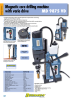
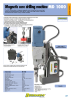
What should I consider when buying a core drilling machine?
When selecting a core drilling machine, consider the diameter of the holes you need to drill and the materials you will be working with. The machine’s drilling capacity and the type of core drill it uses will determine the range of tasks it can perform. Also check the power source and whether the machine offers adjustable feed rates. These factors will affect the efficiency and quality of the drilling process.
Popular brands