






Vice History: Development and Materials

Commercial customer offer**
Vice History: Development and MaterialsPage 39
Show products
search
keyboard_arrow_up
/ 50

Top sellers from Brockhaus Heuer

-27% Brockhaus Heuer HEUER Parallel Vise Jaw Width 120mm Standard Version 100120
100120
€159.99
217,90 € MSRP
5 Variants
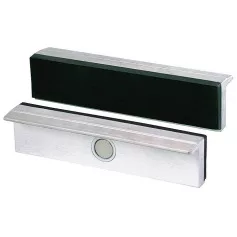
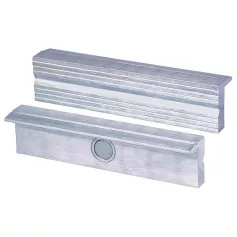
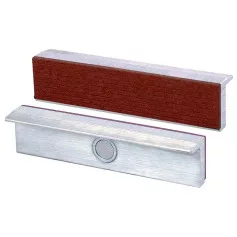
-25% Brockhaus Heuer HEUER Soft Jaw Set Type P, G, F, N, 120mm 115105
115105
€89.45
118,78 € MSRP
3 Variants
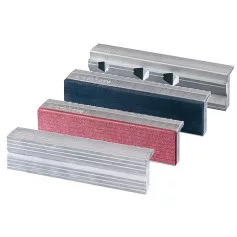
-25% Brockhaus Heuer HEUER Jaw Guard Set Type P, G, F, N 140mm 115106
115106
€94.16
(€14.01 / Piece)
125,08 € MSRP
3 Variants
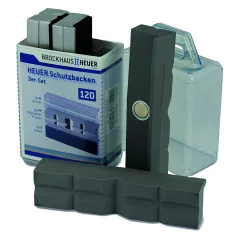
-25% Brockhaus Heuer HEUER Protective Jaw Set Size 100, Types N, G, F and P 115001
115001
€82.98
110,21 € MSRP
2 Variants
-25% Brockhaus Heuer HEUER Protective Jaw Set Size 160mm, Types N, G, F and P 115160
115160
€99.16
131,68 € MSRP
2 Variants
-25% Brockhaus Heuer HEUER Protective Jaw Set Size 120, Types N, G and PP 115122
115122
€67.47
89,58 € MSRP
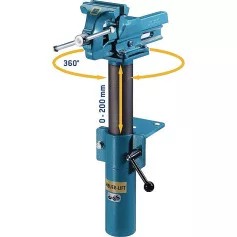
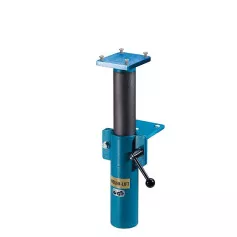
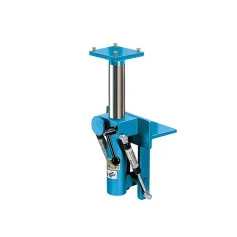
-24% Brockhaus Heuer HEUER Lift height adjustment device for 100 mm jaw width, 360° rotatable 104200
104200
€171.17
225,00 € MSRP
3 Variants
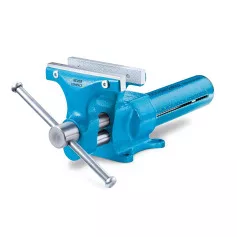
-24% Brockhaus Heuer HEUER Parallel vise HEUER 101 160 jaw width 160 mm opening 225 mm
101 160
€394.33
518,99 € MSRP
2 Variants
-22% Brockhaus Heuer HEUER Parallel vise HEUER 100100 jaw width 100 mm opening 125 mm forged
100100
€128.48
165,00 € MSRP
4 Variants
-21% Brockhaus Heuer HEUER Swivel Clamp Table Thickness 10-60mm Jaw W.120mm Size 115/120mm 119 104
119 104
€109.15
138,99 € MSRP
1 Variants
-21% Brockhaus Heuer HEUER Workpiece Support Jaw B. 140 mm STA HEUER 194 140
194 140
€101.72
128,99 € MSRP
-26% Brockhaus Heuer HEUER Parallel Vise Jaw Width 100mm Standard Version 100100
100100
€120.59
163,70 € MSRP
4 Variants
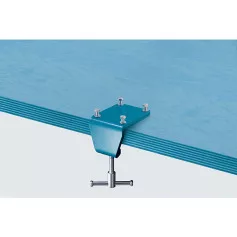
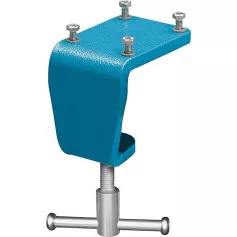
-20% Brockhaus Heuer HEUER Bench Clamp for 100mm Vise 119100
119100
€37.02
46,01 € MSRP
4 Variants
-26% Brockhaus Heuer HEUER Compact Vise 120 mm with Quicklaunch Quick Adjustment 118001
118001
€141.39
192,31 € MSRP
1 Variants
-20% Brockhaus Heuer HEUER Workpiece Support Jaw B. 120 mm STA HEUER 194 120
194 120
€83.78
105,00 € MSRP
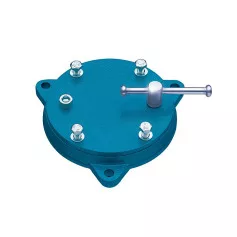
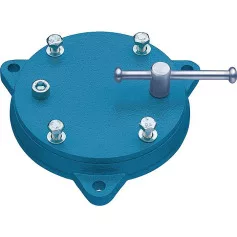
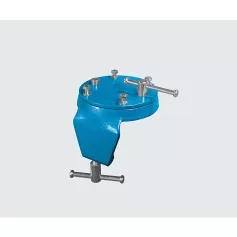
-20% Brockhaus Heuer HEUER Rotary Table for Vise 120mm Jaw Width 103120
103120
€57.06
70,88 € MSRP
10 Variants
-26% Brockhaus Heuer HEUER Lift height adjustment device for COMPACT vise 100 mm 104200-Compact
104200-Compact
€136.81
186,04 € MSRP
5 Variants
-21% Brockhaus Heuer HEUER Workpiece Support Jaw B. 160/180 mm STA HEUER 194 160
194 160
€118.03
148,99 € MSRP
-21% Brockhaus Heuer HEUER Drehteller Heuer Front f.Backen-B.160+180mm stahlgeschmiedet HEUER 103160
103160
€99.03
125,00 € MSRP
3 Variants
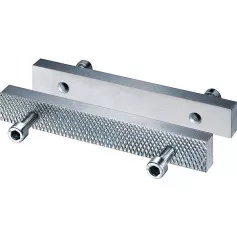
-13% Brockhaus Heuer HEUER Vise Jaw Front Jaw W.120mm Smooth/Checkered 116 120
116 120
€34.75
2 Variants
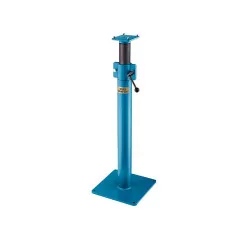
-29% Brockhaus Heuer HEUER Stand Lift for 160mm Vise with Gas Spring 117160
117160
€225.42
315,71 € MSRP
3 Variants
-29% Brockhaus Heuer HEUER Folding Lift for Vise 120mm Jaw Width 106120
106120
€414.71
580,88 € MSRP
2 Variants
-29% Brockhaus Heuer HEUER Folding Device for Vise 140mm – Space-Saving & Ergonomic 105140
105140
€240.24
336,51 € MSRP
3 Variants
-27% Brockhaus Heuer HEUER Parallel Vise 120mm with Interchangeable Jaws 101120
101120
€203.69
280,21 € MSRP
2 Variants
-25% Brockhaus Heuer HEUER Rotary Clamp for 100mm Vise 119103
119103
€68.45
90,88 € MSRP
1 Variants
-25% Brockhaus Heuer HEUER Rotary Clamp for Compact Vise 120mm 119103-Compact
119103-Compact
€58.19
77,27 € MSRP
1 Variants
-19% Brockhaus Heuer HEUER Protective Jaws Pair Type PR, 160mm 107160
107160
€32.86
(€19.55 / Piece)
40,80 € MSRP
3 Variants
View all Brockhaus Heuer products

Early Clamping Techniques and the Parallel Vice

The development of the vice into an indispensable tool began with the replacement of older clamping techniques. In the Middle Ages, clamping with a screw and lever replaced the earlier method of fixing workpieces with a wedge and hammer. This early technique had a significant disadvantage: the movable jaw could only be guided radially relative to the fixed jaw. As a result, clamped workpieces became more or less skewed.

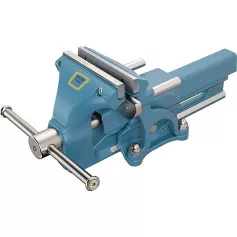
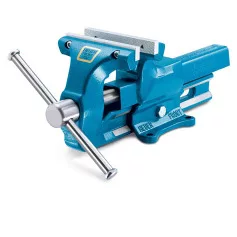
Around 1750, the decisive breakthrough was achieved with the invention of the parallel vice. In this model, the movable jaw is guided on a horizontally sliding carriage. This construction enabled optimal practical application and eliminated the problems of radial guidance.

Cast Iron Vices and Their Properties

In 1830, the first cast iron vice was produced in England. Molten iron can easily be cast into any shape, making casting technology attractive. However, voids often form inside the casting during the process, so-called shrinkage cavities. After cooling, the structure is porous and brittle.

This material structure leads to insufficient resistance under hard stress until fracture. For this reason, safety parts for the automotive industry and high-quality unbreakable vices are today forged from steel. The structure of the steel is homogenised through forging, which ensures the strength and reliability of the tool under load.

Modern Standing and Manufacturing

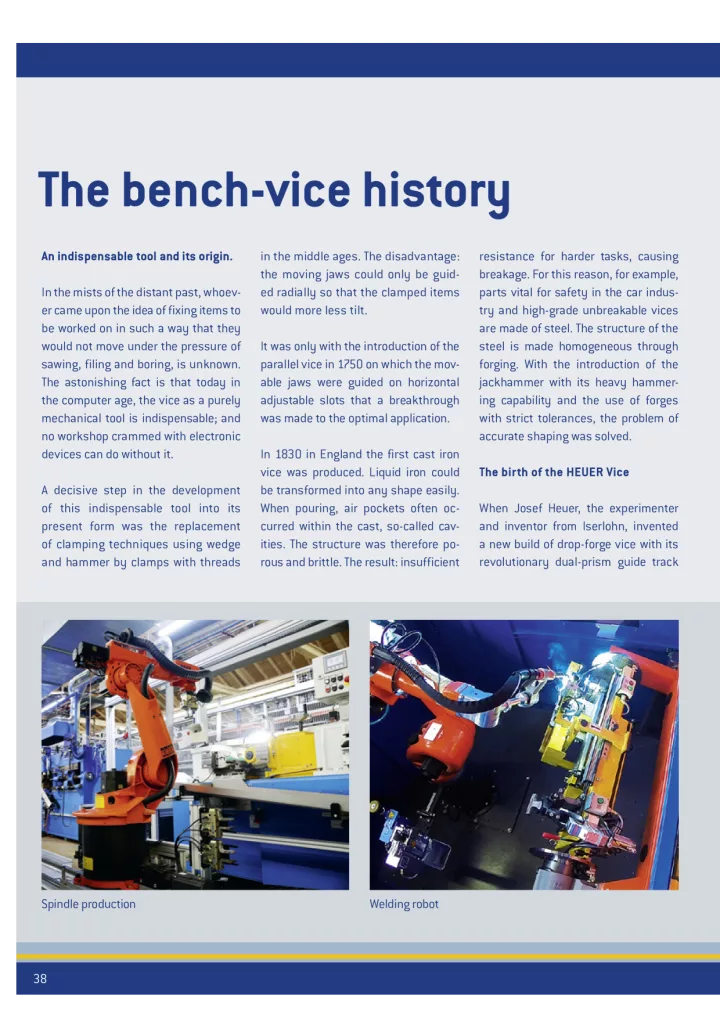
In the modern computer age, the vice as a purely mechanical tool still holds a high standing. It cannot be done without in any workshop, no matter how full of electronics. The manufacturing processes include spindle production and the use of welding robots.

Buying Guide

Engaging with the history of the vice helps to contextualise the development of workpiece clamping devices and to understand technical decisions in the context of their origin. Historical information does not serve direct product selection but provides the framework to contextualise modern requirements for stability, precision and handling. Those who know the evolutionary steps from simple clamping devices to complex mechanical systems can better judge which features in current designs go back to specific historical problems. This contextualisation supports the critical assessment of manufacturer specifications and the preparation of well-founded enquiries when procuring clamping technology.

Historical Context as a Basis for Evaluation

Knowledge of the historical development enables technical specifications of current models to be placed in a broader context. This makes it possible to see whether certain design features go back to proven principles or represent novel solutions. This is particularly relevant when it comes to the comparability of different generations of clamping technology. The historical perspective also helps to understand the significance of material choice and manufacturing methods for the durability and functionality of clamping elements.

FAQ

What role does history play in the selection of modern clamping technology?

History provides a reference framework for understanding technical developments and their impact on today's products. It helps to trace the evolution of functions and materials, which can be useful when evaluating new technologies or interpreting technical data sheets. It is not about the direct application of historical models, but about understanding the principles that live on in modern designs.

How does the development of clamping technology influence today's requirements?

Historical development has shaped standards for stability, repeatability and user-friendliness that are now taken for granted. Modern requirements for precision and reliability are the result of decades of optimisation based on practical experience and technical progress. Understanding this development helps to better assess the relevance of specific technical parameters for the respective application.

Can historical information help with the maintenance of current devices?

Indirectly, yes, by deepening the understanding of fundamental mechanical principles and typical wear mechanisms. Knowledge of historical designs can help to better understand the function of specific components and their interaction. However, for specific maintenance instructions and specifications of current models, the respective manufacturer's documentation is authoritative.

Expert Guide

Evolution of Clamping Principles and Their Technical Significance

The history of vices reflects the general development of mechanical manufacturing. From simple, hand-operated devices to the introduction of gears and spindles and on to precision-manufactured components, a continuous process of optimisation is evident. A central aspect of this development is the improvement of force transmission and control of clamping force. Earlier constructions often focused on maximum holding force, while modern approaches aim for a balance between force, precision and care of the workpiece. Material development, in particular the use of hardened steels for clamping surfaces and spindles, was another key factor in increasing service life and accuracy. Understanding these historical steps enables the technical data of current products – such as spindle thread specifications, jaw openings or material hardness – to be placed in a broader context and their practical relevance for specific application cases to be better assessed. This is a qualitative contextualisation that helps to appreciate the complexity of modern clamping technology without asserting specific model features or unprinted specifications.

50 Pages | Valid until 12/2025 | |

PDF Download (11MB)
Save page as PDF
Request quotation
(non-binding)

Legal issues

The offer is aimed exclusively at business customers, companies, public institutions, tradesmen and freelancers. All prices in catalogues are exclusive of VAT, shipping costs and surcharges if applicable.
The manufacturer is exclusively responsible for the content, price and article details of the products and offers presented in the catalogues. Subject to technical and optical changes by the manufacturer and errors excepted.

Request form for special products

Personal-Quote Personal-Quote

The ToolTeam® Procurement Service

Are you looking for products that are shown in the catalogue but cannot be purchased directly online?
Our procurement service will be pleased to make you a non-binding and individual offer.


Please fill in all mandatory fields (underlined in red)
keyboard_arrow_down
Please fill in all mandatory fields (underlined in red)

