





zoom_in
zoom_out
fullscreen
-25%
PCE Thickness Meter PCE-TG 300-P5EE
Sku: T-910658
€1,003.03 (excl. legal VAT, excl. Shipping)
€1,335.88 MSRP
In stock,ready for shipping within 24h
Piece
doneMade in Germany
Large measuring range
Various sensors available
Battery operation
Error and voids detection
Internal measurement data memory
Print via Bluetooth
Various sensors available
Battery operation
Error and voids detection
Internal measurement data memory
Print via Bluetooth
Content:
1 Piece
Shipping:
€199.92 Versandservice to United Kingdom
For orders from €1,000.00 order total plus €34.45 Customs MRN registration
Lieferung:
Provider:
Sales and delivery by ToolTeam Köln
Payment methods:
Returns:
Security:
Product data
Manufacturer:
PCE Deutschland GmbH
Condition:
NEW
Sku:
T-910658
SKU manufacturer:
PCE-TG 300-P5EE
GTIN Code (EAN):
4250348731111
Weight:
1,04 Kg
All information relating to products from PCE Deutschland GmbH. Technical and optical modifications of the manufacturer and errors reserved.
This page has been machine-translated, the original german version can be found here, please also note the Translation Disclaimer.
Product description
Information on the ultrasound Echo-echo material thickness measuring device
The ultrasound Echo-echo material-thickness measuring device from PCE Instruments is suitable for the wall thickness measurement of homogeneous materials such as metals, plastics, glasses or resins using ultrasound in a measuring range of 0.65… 600 mm. With a maximum resolution of 0.001 mm, very small differences of wall thicknesses can also be measured. For an exact measurement, the correct sound speed of the material to be measured must be set in advance in the Ultrasound Echo-echo material-thickness measuring device. With the PCE-TG 300-P5EE material thickness measuring device, the sound speed can be varied in 1 m/s steps, and multi-point calibration is also possible. If the sound speed of the material is not known, it can also be determined with the Echo-echo material-thickness measuring device. If the thickness of the workpiece is known, this must be entered in the material -thickness measuring device. Ultrasound Echo material-thickness measuring device PCE-TG 300-P5EE application 1. After the ultrasound sensor was placed on the workpiece, the sound speed of the material is displayed directly. The measured values ??are displayed on a large LCD color display, with simple navigation possible via quick selection buttons. Measured values ??can be placed on the internal memory of the Echo-echo wall thickness measuring device. For evaluation, this data can either be evaluated via the optionally available PC software or printed directly with a printer via Bluetooth. The functionality of the echo-echo wall thickness measuring device is expanded via optionally available probes. Probes with 2.5 MHz; 5 MHz and 7 MHz and different diameters are available, so in addition to homogeneous standard materials, both steaming materials such as cast or plastic and thin -walled components can be measured.
Measurement principle ultrasound material thickness measurement
Human hearing is able to record sound frequencies up to a maximum of 16 kHz, frequencies above this border are not audible for humans and are referred to as ultrasound. This ultrasound is used in industry in different areas such as welding, cleaning, with the non -destructive error test (NDT) or also in the material thickness measurement. Depending on the material, ultrasound is absorbed, reflected, scattered or transmitted. Ultrasound Echo material-thickness measuring device PCE-TG 300-P5EE application 1.The material thickness measurement using ultrasound is particularly suitable for all sound-conductive materials with homogeneous structure in which few scatter and reflection effects occur. Metallic materials such as steel are ideal, for example, since the microstructure within the material of ultrasound waves leads very well, which creates high penetration depths and clear reflection echoes at interfaces.
The essential parameters in relation to the material are the speed of sound and the sound weakening. In the case of sound weakening, difference between sound absorption and sound scattering. The sound absorption is caused by converting the sound energy into other forms of energy such as heat. This reduces the strength of the user signal, which causes shortened terms in the material when measuring material thickness. Since the absorption depends on the frequency of the test head, for example, by reducing the test frequency, the absorption can be weakened, which enables higher penetration depths possible. The sound weakening is caused by scatter effects on grain boundaries of the factory fabric structure. Here, too, the sound scatter is increased by increasing the test frequency, compared to the absorption even disproportionately. When it comes to the material -thickness measurement of heavily sound -weaking materials such as plastic or casting, you can achieve better results by reducing the test frequency.
When it comes to the material thickness measurement with ultrasound, use the wave impedances or the sound absorption and the sound speeds of different materials. The greater the differences in the wave impedances or acoustic rebounds between the other -related materials, the more clearly reflections of the ultrasound can be determined. Air, for example, has a steaming property in relation to ultrasound, so that there are strong reflection echoes at interfaces between metals and air. This effect is used in the material thickness measurement to determine wall thicknesses. At the same time, this effect also ensures that it must be applied between the probe and the workpiece to bridge the air gap, which would prevent the ultrasound’s transfer from the probe into the workpiece without the order of coupling gel.
Ultrasound Echo-echo material thickness measurement
In the Ultrasound Echo-echo material thickness measurement, several echoes are evaluated. This method for material -thickness measurement is particularly suitable for coated workpieces. If the ultrasound sensor is placed on the coated workpiece, the coating is also included in the material thickness in the case of a pulse echo measurement. This creates an error that can be attributed to the different sound speeds of coating material and basic material. In a steel unit coated with plastic, there are differences of 3000… 4000 m/s. If the sound speed in the measuring device is adjusted to steel if the total material thickness is measured, the coating would be measured with an incorrect sound speed, which leads to a faulty result. In addition, when it comes to the material thickness measurement, the aim is to measure the strength of a coating- the layer-thick measuring device- but the material thickness of the carrier material is used. The echo-echo function of the ultrasound thickness measuring device is deducted from the total material thickness. With the ultrasound Echo-echo material-thickness measuring device, the thickness of a coated workpiece can be measured without the coating strength being included in the overall result.
Ultrasound sensors for material -thickness measurement
When it comes to the material thickness measurement, the material structure of the material to be tested plays an important role in terms of sensor selection. As already described, the material thickness measurement works the better the more homogeneous the material structure. Metal grille structures are ideal because the ultrasound waves are guided by the material without much litter losses. With cast materials such as cast iron, the litter losses due to graphite storage are usually significantly larger. As a result, the energy losses of the ultrasound waves are greater, which reduces the penetration depths. In the case of very inhomogeneous factory open, such as GfK or CFRP, the wall thickness measurement with a material -thickness measuring device is very difficult or often not possible.
In order to replace this problem, PCE Instruments Ucho-Echo-echo Echo-echo material-thickness measuring device has the option of selecting different sensors. The basic rule is, the more inhomogenic the material, the deeper the ultrasound should be frequency. The thinner things are and the more precisely the measurement should be, the higher the probe frequency should be selected. For example, the 7 MHz ultrasound sensor would be suitable for thin -walled workpieces. For cast materials and also for plastics, 2.5 MHz would have to be selected. By default, the ultrasound material thickness measuring device is delivered with 5 MHz E-E sensor. With 5 MHz you do justice to a relatively large number of applications, as soon as it becomes a little more demanding in a special area as described above, a probe change makes sense. The E-E function also enables the measurement of wall thicknesses through coatings. The other probes do not have this function.
The ultrasound Echo-echo material-thickness measuring device is also suitable for high-temperature applications. A high -temperature sensor with 5 MHz can be used for applications with high surface temperatures up to 300 ° C. It should be noted that special coupling gel is required, which can withstand the corresponding temperatures. It should also be noted that sound speeds are temperature -dependent. At higher temperatures, it should be checked for greater accuracy as for the possible deviations in the sound speed due to temperature changes. In the case of steel, the speed of sound reduces about 1% at a temperature increase of approx. 50 ° C. With a 300 ° C hot surface, measurement deviations of a few tenths of millimeters can therefore occur if a sound speed is entered in the material -thickness measuring device, which is actually only valid for the corresponding material for temperatures at around 20 ° C.
The ultrasound Echo-echo material-thickness measuring device from PCE Instruments is suitable for the wall thickness measurement of homogeneous materials such as metals, plastics, glasses or resins using ultrasound in a measuring range of 0.65… 600 mm. With a maximum resolution of 0.001 mm, very small differences of wall thicknesses can also be measured. For an exact measurement, the correct sound speed of the material to be measured must be set in advance in the Ultrasound Echo-echo material-thickness measuring device. With the PCE-TG 300-P5EE material thickness measuring device, the sound speed can be varied in 1 m/s steps, and multi-point calibration is also possible. If the sound speed of the material is not known, it can also be determined with the Echo-echo material-thickness measuring device. If the thickness of the workpiece is known, this must be entered in the material -thickness measuring device. Ultrasound Echo material-thickness measuring device PCE-TG 300-P5EE application 1. After the ultrasound sensor was placed on the workpiece, the sound speed of the material is displayed directly. The measured values ??are displayed on a large LCD color display, with simple navigation possible via quick selection buttons. Measured values ??can be placed on the internal memory of the Echo-echo wall thickness measuring device. For evaluation, this data can either be evaluated via the optionally available PC software or printed directly with a printer via Bluetooth. The functionality of the echo-echo wall thickness measuring device is expanded via optionally available probes. Probes with 2.5 MHz; 5 MHz and 7 MHz and different diameters are available, so in addition to homogeneous standard materials, both steaming materials such as cast or plastic and thin -walled components can be measured.
Measurement principle ultrasound material thickness measurement
Human hearing is able to record sound frequencies up to a maximum of 16 kHz, frequencies above this border are not audible for humans and are referred to as ultrasound. This ultrasound is used in industry in different areas such as welding, cleaning, with the non -destructive error test (NDT) or also in the material thickness measurement. Depending on the material, ultrasound is absorbed, reflected, scattered or transmitted. Ultrasound Echo material-thickness measuring device PCE-TG 300-P5EE application 1.The material thickness measurement using ultrasound is particularly suitable for all sound-conductive materials with homogeneous structure in which few scatter and reflection effects occur. Metallic materials such as steel are ideal, for example, since the microstructure within the material of ultrasound waves leads very well, which creates high penetration depths and clear reflection echoes at interfaces.
The essential parameters in relation to the material are the speed of sound and the sound weakening. In the case of sound weakening, difference between sound absorption and sound scattering. The sound absorption is caused by converting the sound energy into other forms of energy such as heat. This reduces the strength of the user signal, which causes shortened terms in the material when measuring material thickness. Since the absorption depends on the frequency of the test head, for example, by reducing the test frequency, the absorption can be weakened, which enables higher penetration depths possible. The sound weakening is caused by scatter effects on grain boundaries of the factory fabric structure. Here, too, the sound scatter is increased by increasing the test frequency, compared to the absorption even disproportionately. When it comes to the material -thickness measurement of heavily sound -weaking materials such as plastic or casting, you can achieve better results by reducing the test frequency.
When it comes to the material thickness measurement with ultrasound, use the wave impedances or the sound absorption and the sound speeds of different materials. The greater the differences in the wave impedances or acoustic rebounds between the other -related materials, the more clearly reflections of the ultrasound can be determined. Air, for example, has a steaming property in relation to ultrasound, so that there are strong reflection echoes at interfaces between metals and air. This effect is used in the material thickness measurement to determine wall thicknesses. At the same time, this effect also ensures that it must be applied between the probe and the workpiece to bridge the air gap, which would prevent the ultrasound’s transfer from the probe into the workpiece without the order of coupling gel.
Ultrasound Echo-echo material thickness measurement
In the Ultrasound Echo-echo material thickness measurement, several echoes are evaluated. This method for material -thickness measurement is particularly suitable for coated workpieces. If the ultrasound sensor is placed on the coated workpiece, the coating is also included in the material thickness in the case of a pulse echo measurement. This creates an error that can be attributed to the different sound speeds of coating material and basic material. In a steel unit coated with plastic, there are differences of 3000… 4000 m/s. If the sound speed in the measuring device is adjusted to steel if the total material thickness is measured, the coating would be measured with an incorrect sound speed, which leads to a faulty result. In addition, when it comes to the material thickness measurement, the aim is to measure the strength of a coating- the layer-thick measuring device- but the material thickness of the carrier material is used. The echo-echo function of the ultrasound thickness measuring device is deducted from the total material thickness. With the ultrasound Echo-echo material-thickness measuring device, the thickness of a coated workpiece can be measured without the coating strength being included in the overall result.
Ultrasound sensors for material -thickness measurement
When it comes to the material thickness measurement, the material structure of the material to be tested plays an important role in terms of sensor selection. As already described, the material thickness measurement works the better the more homogeneous the material structure. Metal grille structures are ideal because the ultrasound waves are guided by the material without much litter losses. With cast materials such as cast iron, the litter losses due to graphite storage are usually significantly larger. As a result, the energy losses of the ultrasound waves are greater, which reduces the penetration depths. In the case of very inhomogeneous factory open, such as GfK or CFRP, the wall thickness measurement with a material -thickness measuring device is very difficult or often not possible.
In order to replace this problem, PCE Instruments Ucho-Echo-echo Echo-echo material-thickness measuring device has the option of selecting different sensors. The basic rule is, the more inhomogenic the material, the deeper the ultrasound should be frequency. The thinner things are and the more precisely the measurement should be, the higher the probe frequency should be selected. For example, the 7 MHz ultrasound sensor would be suitable for thin -walled workpieces. For cast materials and also for plastics, 2.5 MHz would have to be selected. By default, the ultrasound material thickness measuring device is delivered with 5 MHz E-E sensor. With 5 MHz you do justice to a relatively large number of applications, as soon as it becomes a little more demanding in a special area as described above, a probe change makes sense. The E-E function also enables the measurement of wall thicknesses through coatings. The other probes do not have this function.
The ultrasound Echo-echo material-thickness measuring device is also suitable for high-temperature applications. A high -temperature sensor with 5 MHz can be used for applications with high surface temperatures up to 300 ° C. It should be noted that special coupling gel is required, which can withstand the corresponding temperatures. It should also be noted that sound speeds are temperature -dependent. At higher temperatures, it should be checked for greater accuracy as for the possible deviations in the sound speed due to temperature changes. In the case of steel, the speed of sound reduces about 1% at a temperature increase of approx. 50 ° C. With a 300 ° C hot surface, measurement deviations of a few tenths of millimeters can therefore occur if a sound speed is entered in the material -thickness measuring device, which is actually only valid for the corresponding material for temperatures at around 20 ° C.
Related results
pc
pce instruments
measurement technology
control technology
weighing technology
laboratory technology
development
production
calibration
pc
pce instruments
measurement technology
control technology
weighing technology
laboratory technology
development
production
calibration
pce
pce instruments
weighing technology
platform scales
shipping scales
pallet scales
inventory scales
platform scales
industrial scales
multifunctional scales
compact scales
weighing platform
pce
pce instruments
measurement technology
machines
systems
vibration measurement
vibration measuring device
vibration measuring device
accelerometer
stethoscope
data logger
Complete catalogs
The offer is aimed exclusively at business customers, companies, public institutions, tradesmen and freelancers. All prices in catalogues are exclusive of VAT, shipping costs and surcharges if applicable.
The manufacturer is exclusively responsible for the content, price and article details of the products and offers presented in the catalogues. Subject to technical and optical changes by the manufacturer and errors excepted.
The manufacturer is exclusively responsible for the content, price and article details of the products and offers presented in the catalogues. Subject to technical and optical changes by the manufacturer and errors excepted.


Matching catalog


Commercial customer offer**
Product suggestions
-25%


PCE-900 Leeb hardness tester for metals |200 ... 900 HL|± 0.8% at HLD=900 |HL |HRC|HRB|HB|HV|HSD
PCE-900
€600.59
€799.91 MSRP
-24%

digital thermometer PCE-T 330
PCE-T 330
€187.10
€246.89 MSRP
-24%

Refractometer PCE-0100 Salinity
PCE-0100
€64.92
€84.92 MSRP
-25%

ATP measuring device PCE-ATP 1-KIT3 for surfaces and water
PCE-ATP 1-KIT3
€1,441.51
€1,919.91 MSRP
-25%

Colorimeter PCE-CSM 5
PCE-CSM 5
€1,919.03
€2,555.88 MSRP
-24%

PCE-DPG 3 Pressure Sensor Water & Gases | 1.4? NPT thread connection| 2.5? large display| Response time < 50 ms
PCE-DPG 3
€253.78
€334.92 MSRP
-24%

building moisture meter PCE-PMI 4
PCE-PMI 4
€378.82
€499.91 MSRP
-24%

Borescope PCE-VE 200-S
PCE-VE 200-S
€431.89
€569.91 MSRP
-24%

PCE-CT 25FN coating thickness gauge for ferrous & non-ferrous metals, including calibration set
PCE-CT 25FN
€110.55
€145.88 MSRP
-25%
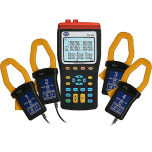
1 + 3-phase power analyzer PCE-360 | RS-232 interface | PC cable | software | 512 K data logger
PCE-360
€1,257.56
€1,674.92 MSRP
-24%

PCE-HS 300N Digital Crane Scale Weighing range (max.) 300 kg | incl. shackle + hook | Accurate ±1% of Mb. | Metal | LCD
PCE-HS 300N
€76.39
€99.91 MSRP
-24%

Borescope PCE-VE 200SV1
PCE-VE 200SV1
€363.69
€479.92 MSRP
-25%

Drehmoment-Kalibrator
PCE-TCT 100
€4,223.32
€5,624.92 MSRP
-25%

Coating Thickness Gauge PCE-CT 80HP-FN1D5
PCE-CT 80HP-FN1D5
€725.97
€966.89 MSRP
-25%

ATP measuring device PCE-ATP 1-KIT for surfaces
PCE-ATP 1-KIT
€1,253.82
€1,669.91 MSRP
No Review yet
Description: No Review yet
Written by: No Review
Rating: 5 out of 5
5 stars, based on 1
reviews
PCE Thickness Meter PCE-TG 300-P5EE
pc
pce instruments
measurement technology
control technology
weighing technology
laboratory technology
development
production
calibration
pc
pce instruments
measurement technology
control technology
weighing technology
laboratory technology
development
production
calibration
pce
pce instruments
weighing technology
platform scales
shipping scales
pallet scales
inventory scales
platform scales
industrial scales
multifunctional scales
compact scales
weighing platform
pce
pce instruments
measurement technology
machines
systems
vibration measurement
vibration measuring device
vibration measuring device
accelerometer
stethoscope
data logger
Information on the ultrasound Echo-echo material thickness measuring device
The ultrasound Echo-echo material-thickness measuring device from PCE Instruments is suitable for the wall thickness measurement of homogeneous materials such as metals, plastics, glasses or resins using ultrasound in a measuring range of 0.65… 600 mm. With a maximum resolution of 0.001 mm, very small differences of wall thicknesses can also be measured. For an exact measurement, the correct sound speed of the material to be measured must be set in advance in the Ultrasound Echo-echo material-thickness measuring device. With the PCE-TG 300-P5EE material thickness measuring device, the sound speed can be varied in 1 m/s steps, and multi-point calibration is also possible. If the sound speed of the material is not known, it can also be determined with the Echo-echo material-thickness measuring device. If the thickness of the workpiece is known, this must be entered in the material -thickness measuring device. Ultrasound Echo material-thickness measuring device PCE-TG 300-P5EE application 1. After the ultrasound sensor was placed on the workpiece, the sound speed of the material is displayed directly. The measured values ??are displayed on a large LCD color display, with simple navigation possible via quick selection buttons. Measured values ??can be placed on the internal memory of the Echo-echo wall thickness measuring device. For evaluation, this data can either be evaluated via the optionally available PC software or printed directly with a printer via Bluetooth. The functionality of the echo-echo wall thickness measuring device is expanded via optionally available probes. Probes with 2.5 MHz; 5 MHz and 7 MHz and different diameters are available, so in addition to homogeneous standard materials, both steaming materials such as cast or plastic and thin -walled components can be measured.
Measurement principle ultrasound material thickness measurement
Human hearing is able to record sound frequencies up to a maximum of 16 kHz, frequencies above this border are not audible for humans and are referred to as ultrasound. This ultrasound is used in industry in different areas such as welding, cleaning, with the non -destructive error test (NDT) or also in the material thickness measurement. Depending on the material, ultrasound is absorbed, reflected, scattered or transmitted. Ultrasound Echo material-thickness measuring device PCE-TG 300-P5EE application 1.The material thickness measurement using ultrasound is particularly suitable for all sound-conductive materials with homogeneous structure in which few scatter and reflection effects occur. Metallic materials such as steel are ideal, for example, since the microstructure within the material of ultrasound waves leads very well, which creates high penetration depths and clear reflection echoes at interfaces.
The essential parameters in relation to the material are the speed of sound and the sound weakening. In the case of sound weakening, difference between sound absorption and sound scattering. The sound absorption is caused by converting the sound energy into other forms of energy such as heat. This reduces the strength of the user signal, which causes shortened terms in the material when measuring material thickness. Since the absorption depends on the frequency of the test head, for example, by reducing the test frequency, the absorption can be weakened, which enables higher penetration depths possible. The sound weakening is caused by scatter effects on grain boundaries of the factory fabric structure. Here, too, the sound scatter is increased by increasing the test frequency, compared to the absorption even disproportionately. When it comes to the material -thickness measurement of heavily sound -weaking materials such as plastic or casting, you can achieve better results by reducing the test frequency.
When it comes to the material thickness measurement with ultrasound, use the wave impedances or the sound absorption and the sound speeds of different materials. The greater the differences in the wave impedances or acoustic rebounds between the other -related materials, the more clearly reflections of the ultrasound can be determined. Air, for example, has a steaming property in relation to ultrasound, so that there are strong reflection echoes at interfaces between metals and air. This effect is used in the material thickness measurement to determine wall thicknesses. At the same time, this effect also ensures that it must be applied between the probe and the workpiece to bridge the air gap, which would prevent the ultrasound’s transfer from the probe into the workpiece without the order of coupling gel.
Ultrasound Echo-echo material thickness measurement
In the Ultrasound Echo-echo material thickness measurement, several echoes are evaluated. This method for material -thickness measurement is particularly suitable for coated workpieces. If the ultrasound sensor is placed on the coated workpiece, the coating is also included in the material thickness in the case of a pulse echo measurement. This creates an error that can be attributed to the different sound speeds of coating material and basic material. In a steel unit coated with plastic, there are differences of 3000… 4000 m/s. If the sound speed in the measuring device is adjusted to steel if the total material thickness is measured, the coating would be measured with an incorrect sound speed, which leads to a faulty result. In addition, when it comes to the material thickness measurement, the aim is to measure the strength of a coating- the layer-thick measuring device- but the material thickness of the carrier material is used. The echo-echo function of the ultrasound thickness measuring device is deducted from the total material thickness. With the ultrasound Echo-echo material-thickness measuring device, the thickness of a coated workpiece can be measured without the coating strength being included in the overall result.
Ultrasound sensors for material -thickness measurement
When it comes to the material thickness measurement, the material structure of the material to be tested plays an important role in terms of sensor selection. As already described, the material thickness measurement works the better the more homogeneous the material structure. Metal grille structures are ideal because the ultrasound waves are guided by the material without much litter losses. With cast materials such as cast iron, the litter losses due to graphite storage are usually significantly larger. As a result, the energy losses of the ultrasound waves are greater, which reduces the penetration depths. In the case of very inhomogeneous factory open, such as GfK or CFRP, the wall thickness measurement with a material -thickness measuring device is very difficult or often not possible.
In order to replace this problem, PCE Instruments Ucho-Echo-echo Echo-echo material-thickness measuring device has the option of selecting different sensors. The basic rule is, the more inhomogenic the material, the deeper the ultrasound should be frequency. The thinner things are and the more precisely the measurement should be, the higher the probe frequency should be selected. For example, the 7 MHz ultrasound sensor would be suitable for thin -walled workpieces. For cast materials and also for plastics, 2.5 MHz would have to be selected. By default, the ultrasound material thickness measuring device is delivered with 5 MHz E-E sensor. With 5 MHz you do justice to a relatively large number of applications, as soon as it becomes a little more demanding in a special area as described above, a probe change makes sense. The E-E function also enables the measurement of wall thicknesses through coatings. The other probes do not have this function.
The ultrasound Echo-echo material-thickness measuring device is also suitable for high-temperature applications. A high -temperature sensor with 5 MHz can be used for applications with high surface temperatures up to 300 ° C. It should be noted that special coupling gel is required, which can withstand the corresponding temperatures. It should also be noted that sound speeds are temperature -dependent. At higher temperatures, it should be checked for greater accuracy as for the possible deviations in the sound speed due to temperature changes. In the case of steel, the speed of sound reduces about 1% at a temperature increase of approx. 50 ° C. With a 300 ° C hot surface, measurement deviations of a few tenths of millimeters can therefore occur if a sound speed is entered in the material -thickness measuring device, which is actually only valid for the corresponding material for temperatures at around 20 ° C. T-910658 PCE-TG 300-P5EE 4250348731111 en ["de","en","it","nl","nl","fr","es","pl","pt","cs","da","sv"] https://www.toolteam.com/en-GB/pce-thickness-meter-pce-tg-300-p5ee-t-910658-4250348731111?dc=GB&cu=EUR 2026-07-12 1003.03 United Kingdom GB DE 14
The ultrasound Echo-echo material-thickness measuring device from PCE Instruments is suitable for the wall thickness measurement of homogeneous materials such as metals, plastics, glasses or resins using ultrasound in a measuring range of 0.65… 600 mm. With a maximum resolution of 0.001 mm, very small differences of wall thicknesses can also be measured. For an exact measurement, the correct sound speed of the material to be measured must be set in advance in the Ultrasound Echo-echo material-thickness measuring device. With the PCE-TG 300-P5EE material thickness measuring device, the sound speed can be varied in 1 m/s steps, and multi-point calibration is also possible. If the sound speed of the material is not known, it can also be determined with the Echo-echo material-thickness measuring device. If the thickness of the workpiece is known, this must be entered in the material -thickness measuring device. Ultrasound Echo material-thickness measuring device PCE-TG 300-P5EE application 1. After the ultrasound sensor was placed on the workpiece, the sound speed of the material is displayed directly. The measured values ??are displayed on a large LCD color display, with simple navigation possible via quick selection buttons. Measured values ??can be placed on the internal memory of the Echo-echo wall thickness measuring device. For evaluation, this data can either be evaluated via the optionally available PC software or printed directly with a printer via Bluetooth. The functionality of the echo-echo wall thickness measuring device is expanded via optionally available probes. Probes with 2.5 MHz; 5 MHz and 7 MHz and different diameters are available, so in addition to homogeneous standard materials, both steaming materials such as cast or plastic and thin -walled components can be measured.
Measurement principle ultrasound material thickness measurement
Human hearing is able to record sound frequencies up to a maximum of 16 kHz, frequencies above this border are not audible for humans and are referred to as ultrasound. This ultrasound is used in industry in different areas such as welding, cleaning, with the non -destructive error test (NDT) or also in the material thickness measurement. Depending on the material, ultrasound is absorbed, reflected, scattered or transmitted. Ultrasound Echo material-thickness measuring device PCE-TG 300-P5EE application 1.The material thickness measurement using ultrasound is particularly suitable for all sound-conductive materials with homogeneous structure in which few scatter and reflection effects occur. Metallic materials such as steel are ideal, for example, since the microstructure within the material of ultrasound waves leads very well, which creates high penetration depths and clear reflection echoes at interfaces.
The essential parameters in relation to the material are the speed of sound and the sound weakening. In the case of sound weakening, difference between sound absorption and sound scattering. The sound absorption is caused by converting the sound energy into other forms of energy such as heat. This reduces the strength of the user signal, which causes shortened terms in the material when measuring material thickness. Since the absorption depends on the frequency of the test head, for example, by reducing the test frequency, the absorption can be weakened, which enables higher penetration depths possible. The sound weakening is caused by scatter effects on grain boundaries of the factory fabric structure. Here, too, the sound scatter is increased by increasing the test frequency, compared to the absorption even disproportionately. When it comes to the material -thickness measurement of heavily sound -weaking materials such as plastic or casting, you can achieve better results by reducing the test frequency.
When it comes to the material thickness measurement with ultrasound, use the wave impedances or the sound absorption and the sound speeds of different materials. The greater the differences in the wave impedances or acoustic rebounds between the other -related materials, the more clearly reflections of the ultrasound can be determined. Air, for example, has a steaming property in relation to ultrasound, so that there are strong reflection echoes at interfaces between metals and air. This effect is used in the material thickness measurement to determine wall thicknesses. At the same time, this effect also ensures that it must be applied between the probe and the workpiece to bridge the air gap, which would prevent the ultrasound’s transfer from the probe into the workpiece without the order of coupling gel.
Ultrasound Echo-echo material thickness measurement
In the Ultrasound Echo-echo material thickness measurement, several echoes are evaluated. This method for material -thickness measurement is particularly suitable for coated workpieces. If the ultrasound sensor is placed on the coated workpiece, the coating is also included in the material thickness in the case of a pulse echo measurement. This creates an error that can be attributed to the different sound speeds of coating material and basic material. In a steel unit coated with plastic, there are differences of 3000… 4000 m/s. If the sound speed in the measuring device is adjusted to steel if the total material thickness is measured, the coating would be measured with an incorrect sound speed, which leads to a faulty result. In addition, when it comes to the material thickness measurement, the aim is to measure the strength of a coating- the layer-thick measuring device- but the material thickness of the carrier material is used. The echo-echo function of the ultrasound thickness measuring device is deducted from the total material thickness. With the ultrasound Echo-echo material-thickness measuring device, the thickness of a coated workpiece can be measured without the coating strength being included in the overall result.
Ultrasound sensors for material -thickness measurement
When it comes to the material thickness measurement, the material structure of the material to be tested plays an important role in terms of sensor selection. As already described, the material thickness measurement works the better the more homogeneous the material structure. Metal grille structures are ideal because the ultrasound waves are guided by the material without much litter losses. With cast materials such as cast iron, the litter losses due to graphite storage are usually significantly larger. As a result, the energy losses of the ultrasound waves are greater, which reduces the penetration depths. In the case of very inhomogeneous factory open, such as GfK or CFRP, the wall thickness measurement with a material -thickness measuring device is very difficult or often not possible.
In order to replace this problem, PCE Instruments Ucho-Echo-echo Echo-echo material-thickness measuring device has the option of selecting different sensors. The basic rule is, the more inhomogenic the material, the deeper the ultrasound should be frequency. The thinner things are and the more precisely the measurement should be, the higher the probe frequency should be selected. For example, the 7 MHz ultrasound sensor would be suitable for thin -walled workpieces. For cast materials and also for plastics, 2.5 MHz would have to be selected. By default, the ultrasound material thickness measuring device is delivered with 5 MHz E-E sensor. With 5 MHz you do justice to a relatively large number of applications, as soon as it becomes a little more demanding in a special area as described above, a probe change makes sense. The E-E function also enables the measurement of wall thicknesses through coatings. The other probes do not have this function.
The ultrasound Echo-echo material-thickness measuring device is also suitable for high-temperature applications. A high -temperature sensor with 5 MHz can be used for applications with high surface temperatures up to 300 ° C. It should be noted that special coupling gel is required, which can withstand the corresponding temperatures. It should also be noted that sound speeds are temperature -dependent. At higher temperatures, it should be checked for greater accuracy as for the possible deviations in the sound speed due to temperature changes. In the case of steel, the speed of sound reduces about 1% at a temperature increase of approx. 50 ° C. With a 300 ° C hot surface, measurement deviations of a few tenths of millimeters can therefore occur if a sound speed is entered in the material -thickness measuring device, which is actually only valid for the corresponding material for temperatures at around 20 ° C. T-910658 PCE-TG 300-P5EE 4250348731111 en ["de","en","it","nl","nl","fr","es","pl","pt","cs","da","sv"] https://www.toolteam.com/en-GB/pce-thickness-meter-pce-tg-300-p5ee-t-910658-4250348731111?dc=GB&cu=EUR 2026-07-12 1003.03 United Kingdom GB DE 14